Understanding Ocean Bound Plastic (OBP) Certification Program
What is OBP ?
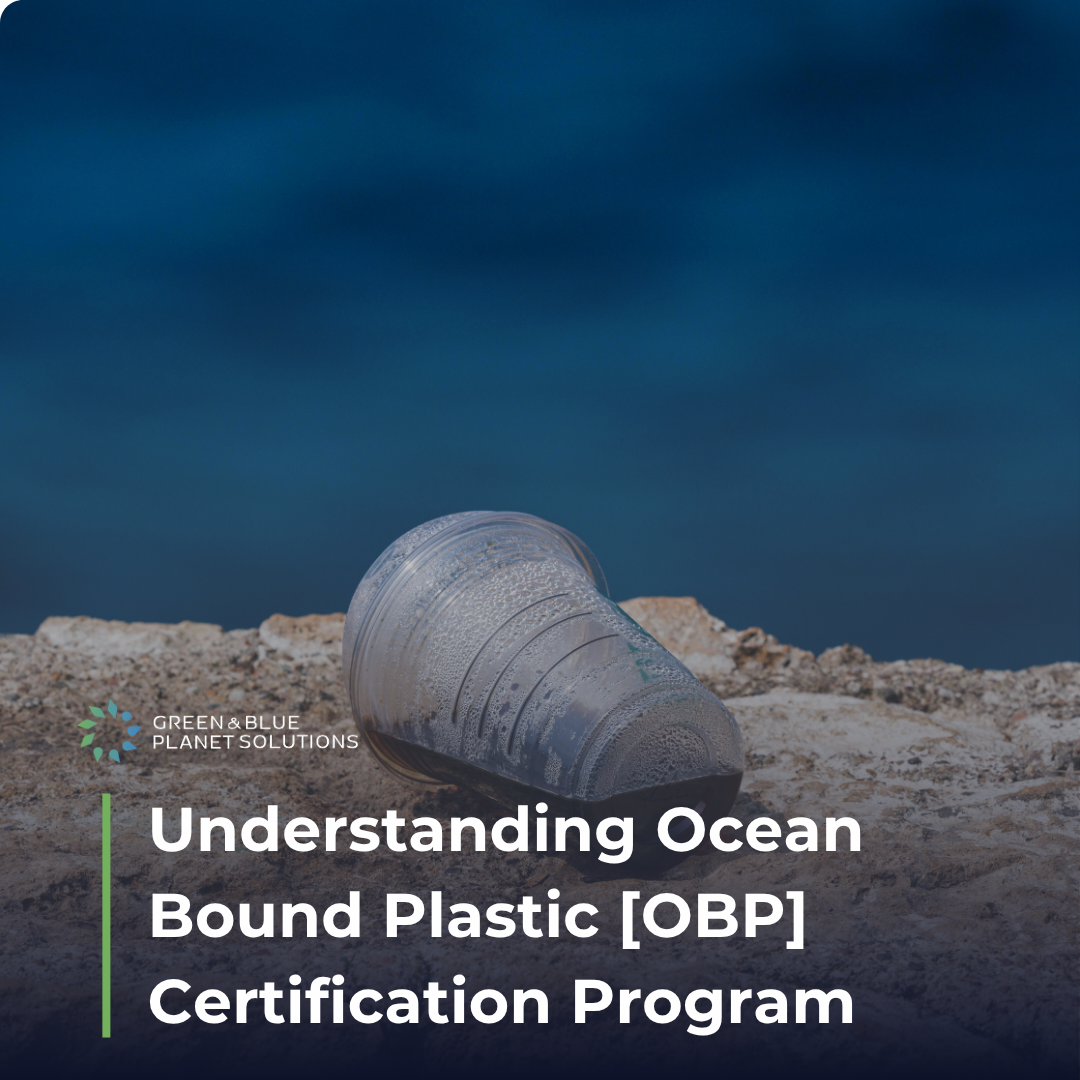
Ocean Bound Plastic (OBP) essentially means the abandoned plastic waste which are “at risk of ending up in the ocean” where the waste management is nonexistent or inefficient.
OBP Certification Program is a certification program and labeling scheme aimed to address and prevent marine plastic pollution. Established by Zero Plastic Oceans, a non-governmental organization, OBP certification program encourages collection, removal and treatment of OPB waste through credits or certifications. OBP schemes ensure a traceable activity chain from collection to handover to an appropriate end destination.
OBP Program covers any type of organization involved in the following activities
- Collection or purchase of OBP
- Storage, sorting and preparation, transport
- Hand over to an approved Treatment Facility or treatment by the Organization itself
Four Categories of OBP
OBP is classified into four distinct geographical categories:
- Potential OBP – Inadequately collected plastic waste located within a 50 km distance of the coastline
- Waterways OBP – Inadequately collected plastic waste located 200m from rivers & in rivers
- Shoreline OBP – Inadequately collected plastic waste located 200m from shores
- Fishing Material – Used fishing gears and plastic bycatch
OBP Subprograms
OBP Certification Program has two subprograms mainly based on whether the OBPs are commercially recyclable or not.
- OBP Neutrality Certification Subprogram – Neutrality certification is for operations of non-commercially recyclable The rationale is that non-commercially recyclables have little to no market value, which is why it is critical to incentivize collection and treatment of non-commercially recyclable OBP.
- OBP Recycling Certification Subprogram – The Recycling certification subprogram is applicable to collection, or/and recycle commercially recyclable Its goal is to increase recycling rates by adding value to commercially recyclable OBP. It encourages the replacement of virgin plastics with recycled equivalents.
It is possible to register either or both subprograms as real impacts occur with removal of all sorts of plastic from the environment. Organizations who make social impact in addition to the environmental benefits may certify for social component.