What to Do If Soil and Groundwater Contamination Exceeds Regulatory Standards?
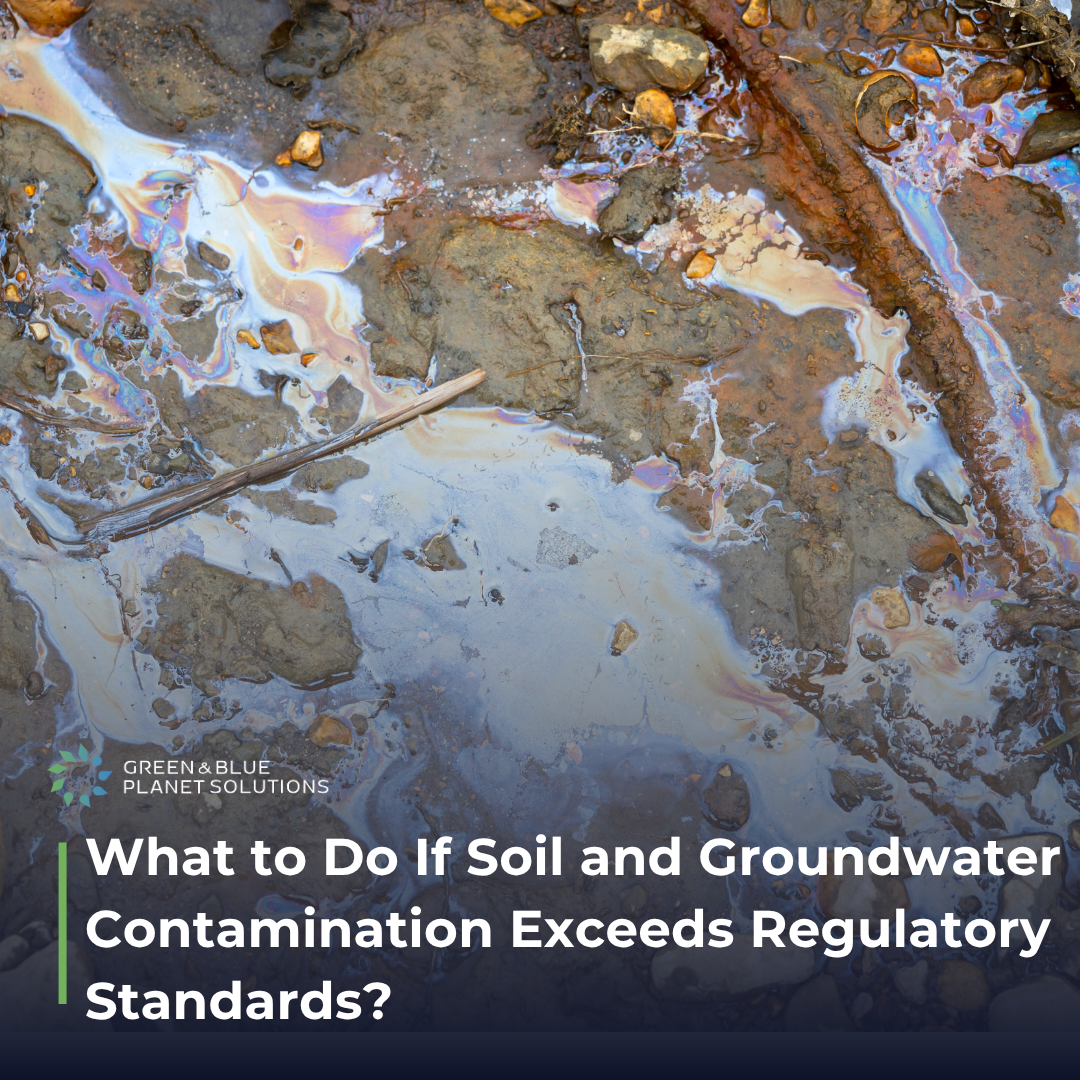
Soil and groundwater are essential natural resources that support ecosystems, public health, and economic development. They are vital for agriculture, domestic water use, and industrial activities. Maintaining good soil and groundwater quality is therefore essential for environmental protection and the sustainable use of land.
However, industrial operations, chemical storage and handling, waste management, and accidental spills can contaminate soil and groundwater. Without proper monitoring and management, contaminants may spread, posing risks to human health, the environment, and increasing remediation costs.
Regular soil and groundwater quality assessments before, during, and after industrial operations help identify contamination at an early stage and support effective environmental management. In Thailand, contamination is regulated under national environmental standards and industrial regulations. If contaminant concentrations exceed the applicable standards, facility operators must implement appropriate control measures to prevent further contamination and protect the environment and public health.
What to Do If Soil and Groundwater Contamination Exceeds Regulatory Standards?
When soil or groundwater contamination exceeds regulatory standards, the first priority is to identify the source of contamination, contain its spread, and implement appropriate control measures. A suitable remediation strategy should then be selected to reduce contamination and restore the affected area.
The remediation approach should be based on the type and concentration of contaminants, the extent of contamination, and the site’s physical and geological conditions. After remediation, soil and groundwater quality should be monitored to verify the effectiveness of the implemented measures and prevent future contamination.
For factories regulated under the Ministerial Regulation on the Control of Soil and Groundwater Contamination within Factory Premises B.E. 2559 (2016), contamination exceeding the prescribed standards requires compliance with additional legal requirements as follows:
1. Prepare and Submit a Contamination Control Plan
Factory operators must prepare and submit a contamination control and reduction plan to the Department of Industrial Works (DIW) or the Provincial Industry Office within 180 days of detecting contamination.
The report should include:
- Types of contaminants
- Activities associated with the contamination
- Proposed control or remediation measures
- Implementation schedule
2. Implement the Proposed Measures
Factory operators must implement the proposed measures to control contaminant migration and restore soil and groundwater quality to comply with regulatory standards.
3. Evaluate the Effectiveness of the Measures
Following remediation, soil and groundwater samples should be collected and analyzed to evaluate the effectiveness of the implemented measures. If contamination remains above the regulatory limits, the remediation strategy should be reviewed and improved until compliance is achieved.
Factories should also establish a long-term monitoring program and strengthen chemical and waste management practices to minimize the risk of future contamination.
4. Submit a Progress Report
Factory operators must periodically submit a remediation progress report to the Department of Industrial Works (DIW) or the Provincial Industry Office using the prescribed reporting format.
Both the contamination control plan and the progress report must comply with Appendix 5 of the Ministry of Industry Notification on Soil and Groundwater Contamination Criteria, Soil and Groundwater Quality Monitoring, Notification Requirements, and Reporting Requirements B.E. 2559 (2016).
Contaminated Site Remediation Technologies
Selecting an appropriate remediation technology depends on several factors, including the type and concentration of contaminants, soil and groundwater conditions, the extent of contamination, project timeframe, cost, and remediation objectives.
In general, contaminated site remediation technologies can be classified into two main approaches: In situ remediation, which treats contamination without excavating the affected materials, and Ex situ remediation, which involves removing contaminated soil or groundwater for treatment. The most commonly used technologies are grouped into six categories:
- In Situ Biological Treatment – Uses microorganisms or plants to degrade or remove contaminants.
- In Situ Physical/Chemical Treatment – Applies physical or chemical processes, such as chemical oxidation/reduction or in situ soil flushing, to treat contaminants.
- In Situ Thermal Treatment – Uses heat to destroy or remove contaminants from soil or groundwater.
- Ex Situ Biological/Chemical Treatment – Includes technologies such as biopiles, composting, and chemical extraction after excavation.
- Ex Situ Thermal Treatment – Includes technologies such as thermal desorption and pyrolysis.
- Containment Technologies – Prevent the migration of contaminants and limit the spread of contamination to surrounding areas.
Reference
- https://ratchakitcha.soc.go.th/documents/2071112.pdf?__cf_chl_tk=HHtg0g4ma6xlH3_NH7Zosw_1AJfhI90f.qiKa8UBbtQ-1768199968-1.0.1.1-A7r.2Zd87Vt_ntR0KzQ65WfH49k8jALJinitduq5wUU
- https://ratchakitcha.soc.go.th/documents/2092358.pdf?__cf_chl_tk=OQcTfRD8.b55V7dESwa9gcLctC3RnL.2_jfY5tDXaGU-1771898870-1.0.1.1-aedji6ZOJzwC8bYpCnj9XVV2NDeoi5Mssrmcod9XoW8
- http://reg3.diw.go.th/env/wp-content/uploads/2024/01/manual_v27122566.pdf
- http://reg3.diw.go.th/env/download/inoffice-file/publication-file/%E0%B9%80%E0%B8%98%C2%84%E0%B9%80%E0%B8%98%E0%B8%99%E0%B9%80%E0%B8%99%C2%88%E0%B9%80%E0%B8%98%E0%B8%81%E0%B9%80%E0%B8%98%E0%B8%97%E0%B9%80%E0%B8%98%E0%B8%8D/%E0%B8%A1%E0%B8%A5%E0%B8%9E%E0%B8%B4%E0%B8%A9%E0%B8%94%E0%B8%B4%E0%B8%99/Manual7aug2568.pdf