Organizing a Training on Chemical Laws in the Thai Industry
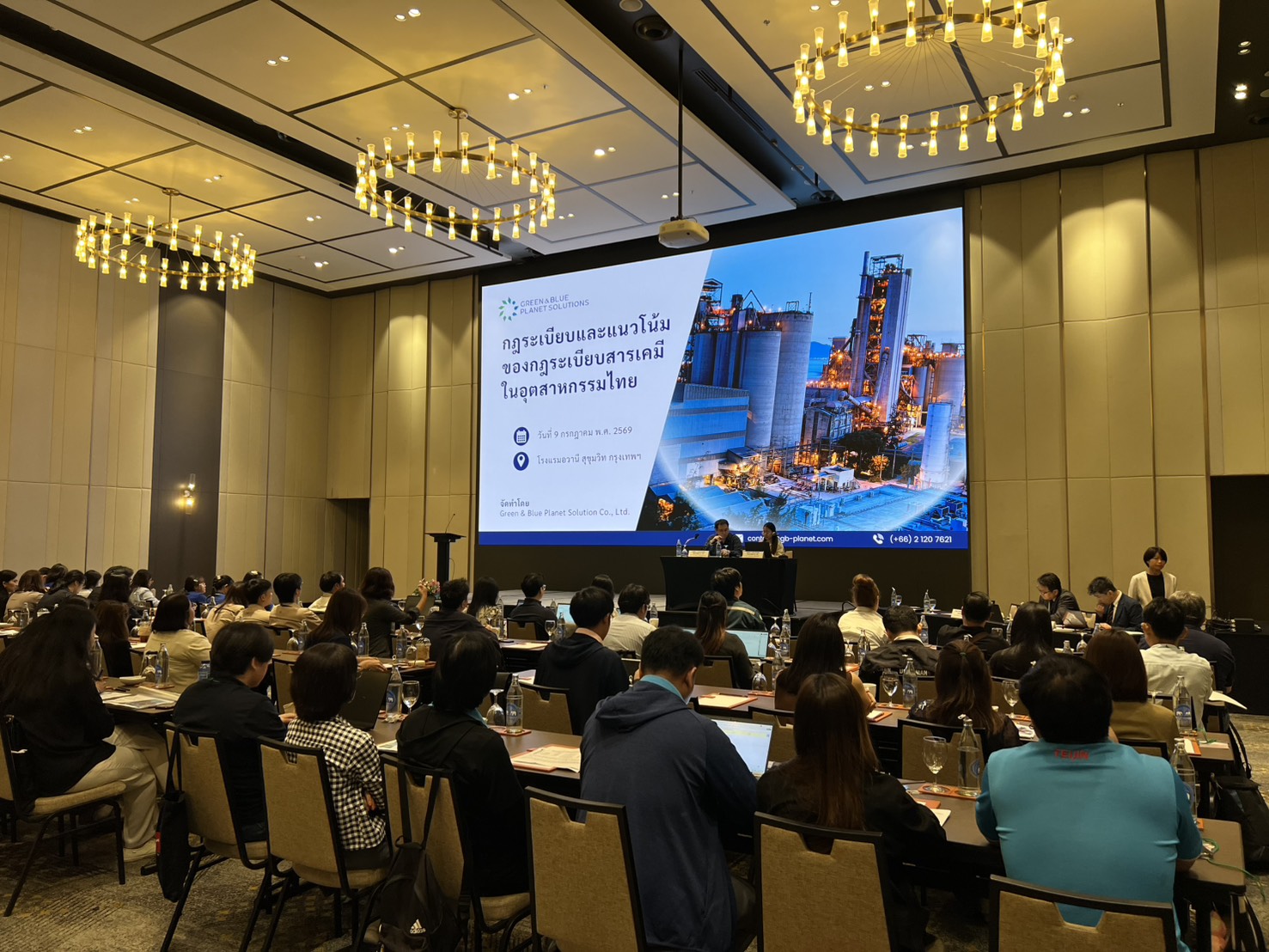
Location: Bangkok, Thailand
Industry: Chemical Industry Association
Services: Training Program on Chemical Regulations in the Thai Industry
Background
The Japanese Chamber of Commerce, Bangkok (JCC), in collaboration with the Chemical Industry Group, annually hosts the Chemical Safety Seminar for Japanese companies operating in Thailand. The objective is to enhance understanding of chemical management and related laws and regulations in Thailand, as well as to share crucial information and trends impacting the chemical industry.
Marking the 10th anniversary of the seminar, the content was expanded beyond chemical regulations to encompass decarbonization and sustainability, which are playing an increasingly vital role in the chemical sector.
Green & Blue Planet Solutions (GBP) was invited to share insights as an expert in Thai legal compliance, environmental regulations, and sustainability. GBP conducted Japanese-language sessions for Japanese executives and staff, alongside Thai-language sessions for Thai personnel responsible for chemical management and legal compliance.
-
Japanese Session: Covered Thailand’s chemical laws, recent regulatory updates, and growing sustainability trends such as ISCC certification, product and corporate carbon footprints, and overall decarbonization trends.
-
Thai Session: Focused on Thailand’s chemical laws and practical implementation guidelines for daily operations.
Our Approach
GBP designed the seminar content by considering the specific legal and chemical management challenges Japanese companies face in Thailand, alongside the evolving business landscape within the chemical industry. The material was carefully tailored to suit the distinct roles and responsibilities of Japanese and Thai attendees.
-
For Japanese Participants: GBP provided an overview of Thailand’s chemical regulatory structure, key compliance requirements, notification and licensing procedures, and the latest regulatory updates. Complex Thai regulations were conveyed in Japanese from a management and business perspective, enabling executives and staff to clearly understand the operational impacts. Furthermore, the presentation covered critical topics like decarbonization and sustainability—including ISCC and other sustainability certifications, carbon footprints, and GHG calculation and management—highlighting their impacts on business operations and global supply chains.
-
For Thai Participants: GBP delivered a Thai-language session covering the legal structure, essential compliance requirements, relevant procedures, and key focal points for practical application in routine operations.
The event also featured a Q&A session, allowing companies to ask about real-world legal and chemical management issues. GBP’s experts provided highly practical advice based on their extensive knowledge of Thai law and corporate consulting experience.
Our Value
Japanese companies operating in Thailand must navigate not only domestic chemical laws and regulations but also rapidly evolving global expectations regarding decarbonization and supply chain sustainability.
GBP integrates deep expertise in Thailand’s chemical regulations with profound knowledge and experience in sustainability—such as ISCC certification, carbon footprint assessment, and GHG management. This enables us to provide comprehensive insights and advice that cover both legal compliance and the sustainability requirements currently shaping the chemical industry.
Another core strength of GBP is our ability to communicate complex legal and technical concepts seamlessly in both Japanese and Thai. We bridge the gap within organizations by explaining matters to Japanese executives from a management perspective while guiding Thai personnel from a practical, operational standpoint.
By combining local legal expertise, sustainability knowledge, and bilingual communication capabilities, GBP effectively empowers Japanese companies in Thailand to elevate their legal compliance, prepare for emerging regulations, and confidently meet the sustainability expectations of global markets and supply chains.